1. What is Mimosa Hostilis Root Bark (MHRB)?
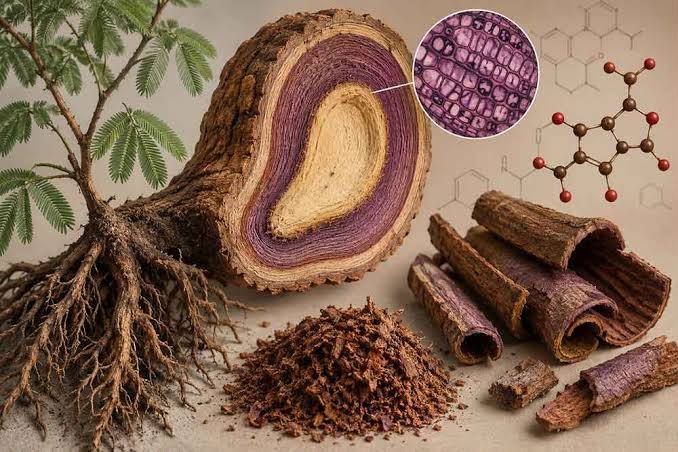
Mimosa Hostilis Root Bark (MHRB) refers to the dried inner bark stripped from the roots of Mimosa tenuiflora. It is a native tropical tree famous for its high concentration of natural condensed tannins and rich reddish-purple pigments.
2. Are Mimosa Hostilis, Mimosa Tenuiflora, and Tepescohuite the same plant?
Yes. Mimosa tenuiflora is the modern scientific name, while Mimosa hostilis is its widely recognized botanical synonym. In Mexico, the tree is commonly known as Tepescohuite, and in Brazil, it is referred to as Jurema Preta.
3. What is the difference between inner root bark and outer bark?
The outer root bark is the rough, greyish protective layer on the outside of the root. The inner root bark (MHRB) is the dense, deep-red layer underneath that contains the highest concentration of tannins, active botanical compounds, and natural pigments. Premium MHRB products use strictly isolated inner bark.
4. What is Mimosa Hostilis root bark used for?
MHRB is widely used as a high-yield natural textile dye for wool, silk, and cotton. It is also employed as a natural agent in traditional leather vegetable tanning, an additive in handcrafted soaps and cosmetics, and a botanical specimen for study.
5. What forms does MHRB come in?
It is typically sold in three commercial formats:
-
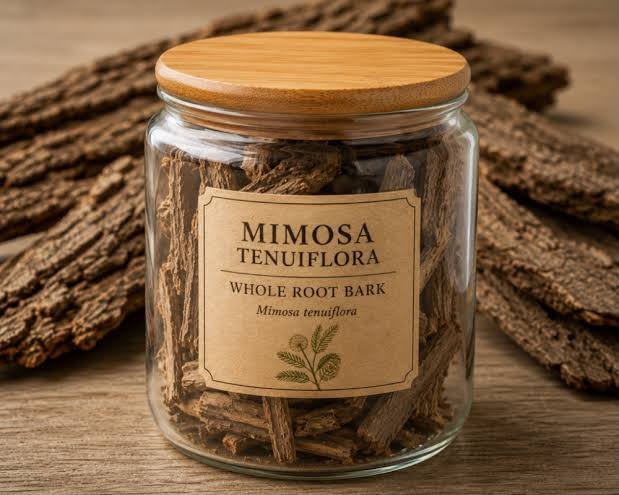
Whole Bark: Intact inner bark strips that offer the longest shelf life.
-
Shredded Bark: Coarse fibrous strands that are easy to steep and strain.
-
Fine Powder: Micro-milled bark that provides maximum surface area for fast extraction.
6. Is Mimosa Hostilis Root Bark legal in the United States?
Yes. Raw MHRB is legal to buy, sell, and possess in the United States when marketed and used for legitimate, non-consumable applications such as natural fabric dyeing, leather tanning, and soapmaking.
7. Where does high-quality MHRB come from?
The highest quality MHRB is ethically harvested from mature trees in the semi-arid Caatinga biome of Northeastern Brazil and the mineral-rich regions of Southern Mexico.
8. Is the harvesting process environmentally sustainable?
Reputable suppliers partner with local harvesters who practice selective root stripping. By carefully taking bark only from mature lateral roots, the main taproot and tree structure remain undamaged, allowing the plant to heal and continue growing naturally.
9. What color dye does Mimosa Hostilis root bark produce?
When extracted for natural textile dyeing, MHRB yields vibrant, light-fast shades ranging from deep burgundy and crimson to dark violet, mauve, and earthy magenta, depending on the mordant and fiber used.
10. Do I need a mordant when dyeing fabrics with MHRB?
Because inner root bark has an exceptionally high natural tannin content, it acts as a self-mordanting dye on animal fibers like wool and silk. However, adding alum or iron can shift color tones and increase wash-fastness on cellulose fibers like cotton and linen.
11. How should I store MHRB to maintain its quality?
Store your bark in a cool, dry, dark place inside an airtight container or moisture-sealed bag away from direct heat and sunlight. Properly stored whole or shredded bark can retain its dye potency for years.
12. Does Mimosa Hostilis root bark expire?
MHRB does not spoil or go bad if kept dry. However, long-term exposure to moisture, light, air, or heat can gradually degrade its pigment density and tannin profile over time.
13. Which form is better: powdered, shredded, or whole bark?
It depends on your workflow:
-
Powder dissolves rapidly for fast extraction.
-
Shredded bark steeps quickly and filters out easily without clogging strainers.
-
Whole bark allows visual inspection of purity and maintains freshness longest in storage.
14. How can I tell if MHRB is authentic and high quality?
Authentic inner root bark features a distinct deep red-purple or magenta interior hue and an earthy botanical aroma. Avoid products that look pale brown or woody, as this indicates heavy dilution with outer trunk wood.
15. Why is buying 1kg or bulk quantities often recommended?
Purchasing 1kg or larger sizes lowers the overall cost per gram, reduces fulfillment costs, and ensures complete color uniformity across large dye batches or cosmetic runs.
16. Can MHRB be used in skincare or soapmaking?
Yes. Finely ground MHRB (often called Tepescohuite in cosmetics) is added to handcrafted soaps, salves, and scrubs for its natural astringent properties and rich dark-red coloring.
17. Is MHRB safe to handle?
MHRB is considered safe for topical and crafting applications. When handling micro-fine powders, wearing a standard dust mask is recommended to avoid inhaling fine airborne dust particles.
18. Why is domestic shipping preferable to ordering directly from overseas?
Ordering from a domestic US supplier avoids international customs delays, unpredictable import duties, and border holds, ensuring faster and more reliable delivery.
19. How is MHRB processed after harvesting?
After collection, the outer bark is peeled away, leaving only the inner layer. This inner bark is sun-dried under natural ambient conditions to lock in native compounds before being left whole, shredded, or milled into powder.
20. How do I know how much MHRB to use for a natural dye bath?
As a general baseline for natural dyeing, a 1:1 ratio of dry fabric weight to dry MHRB weight (100% weight of fabric) produces deep, rich burgundy tones. Using lower ratios (25%–50% WOF) yields lighter mauve and soft violet shades.
.
Finding a reliable, high-grade supplier when you are ready to buy mimosa bark online can make all the difference in the success of your botanical projects. Whether you are a professional fiber artist formulating rich natural textile dyes, a traditional leather tanner seeking high-concentration tannins, or a botanical enthusiast looking for unadulterated specimens, purity and source matter most.
At Mimosa Root Bark USA, we simplify the process for creators across the United States. We specialize exclusively in sourcing, testing, and distributing 100% pure Mimosa tenuiflora (syn. Mimosa hostilis) inner root bark. By stocking our inventory directly within domestic US warehouses, we eliminate international customs delays and deliver top-tier materials straight to your door.
Why Choose Our Store When You Buy Mimosa Bark?
When shopping for raw botanical supplies, quality varies widely between suppliers. Low-grade products are often diluted with pale outer trunk bark, twig debris, or woody cores that lack the active botanical compounds and rich natural pigments found strictly in the root system.
When you purchase your materials from us, you get a product built on quality and consistency:
-
100% Isolated Inner Root Layer: We strictly supply the deep-layer inner root bark (MHRB), which contains the highest concentration of natural condensed tannins and deep magenta pigments.
-
Unadulterated & Additive-Free: Our bark contains zero synthetic dyes, chemical preservatives, heavy metal contaminants, or artificial binders.
-
Versatile Formats for Every Project: Choose from whole inner bark strips for long-term storage, coarse shreds for easy steeping, or micro-milled fine powder for rapid extraction.
-
Fast, Secure Domestic Shipping: All orders ship directly from within the United States in heavy-duty, moisture-proof vacuum packaging to ensure rapid delivery without border holds or import paperwork.